
Who is Stephen Miller?
Stephen Miller is one of the most influential officials in the second Trump administration, despite holding a title — Deputy Chief of Staff — that ranks below Cabinet secretaries. Multiple outlets have described him as the chief architect of the administration's immigration agenda, with authority that reportedly extends into decisions normally made by the Justice Department, the Pentagon, and the Vice President's office1. He first rose to national prominence as a senior adviser during Trump's first term, where he was widely credited as the driving force behind the 2018 family separation policy at the southern border2.
| Born | August 23, 1985 — Santa Monica, California |
| Education | Duke University (B.A., Political Science) |
| Prior roles | Press secretary to Rep. Michele Bachmann and Sen. Jeff Sessions; Senior Advisor to President Trump (2017–2021); President, America First Legal (2021–2025) |
| Current role | White House Deputy Chief of Staff for Policy & Homeland Security Advisor (2025–present) |
Leaked Emails Promoting White Nationalist Material
In November 2019, the Southern Poverty Law Center's Hatewatch project published hundreds of emails Miller sent between 2015 and 2016 to then-Breitbart editor Katie McHugh, while Miller worked for Sen. Jeff Sessions3. In them, Miller recommended Breitbart cover "The Camp of the Saints," a novel widely cited by white nationalist movements that depicts nonwhite immigrants overrunning white society, and shared a link to VDARE, a website that publishes white-nationalist writers4. The emails also showed Miller pushing for increased Breitbart coverage of crimes committed by Hispanic and nonwhite people5.
Miller has never directly addressed the substance of the emails himself. The White House response, from spokesperson Stephanie Grisham, was to attack the SPLC's credibility, calling it "an utterly-discredited, long-debunked far-left smear organization," without disputing that Miller sent the emails or challenging their content6.
Dozens of members of Congress, including leaders of the Congressional Hispanic, Black, Asian Pacific American, and Progressive caucuses, called for Miller's resignation, saying the emails made clear he held a "racist and xenophobic worldview" while shaping the country's immigration policy7. Sen. Mitt Romney, a Republican, said he'd want Miller to "more fully describe his involvement with that movement"8.
Supporters echoed the White House's framing that the SPLC is a partisan advocacy group with its own agenda, and noted the emails were provided by McHugh, who was fired from Breitbart in 2017 and had her own reasons for coming forward, as reasons to view the leak skeptically.
Architect of Family Separation at the Border
In 2018, the Trump administration's "zero tolerance" policy criminally charged adults crossing the border, which resulted in their children being classified as "unaccompanied minors" and placed in separate federal custody. More than 3,000 children were separated from their parents; hundreds were still not reunited months later9. Miller was widely reported as the policy's chief architect, and reportedly pushed for it to go further, proposing separating every family that crossed the border, including those seeking asylum legally — an expansion that would have affected roughly 25,000 additional children beyond what was ultimately implemented10. Miller told the New York Times the policy was meant to send a message that "no nation can have the policy that whole classes of people are immune from immigration law or enforcement"11.
Miller has defended the policy's underlying logic as necessary deterrence, and after it ended, reportedly told colleagues he believed it had worked and considered reviving a similar plan under a different name12.
Even Miller's own family objected: his uncle, Dr. David Glosser, wrote an op-ed calling him an "immigration hypocrite," noting their family fled anti-Jewish persecution in Belarus in 1903 under conditions that would have been blocked by the restrictions Miller championed, and calling the family separation policy "morally reprehensible"13.
Supporters argue that consistent enforcement of immigration law, including consequences for illegal entry, is a legitimate deterrent policy that previous administrations lacked the will to pursue, and that the family separations resulted from parents' choice to cross illegally, not from cruelty for its own sake.
Deportations in Defiance of Court Orders
In March 2025, the administration invoked the Alien Enemies Act of 1798 — a wartime statute rarely used in peacetime — to deport roughly 250 Venezuelan and Salvadoran men, including Maryland resident Kilmar Abrego Garcia, to El Salvador's CECOT mega-prison without hearings14. Reporting described Miller as having "orchestrated" the process from the West Wing alongside Homeland Security Secretary Kristi Noem15. U.S. District Judge James Boasberg had ordered deportation flights turned back; they landed anyway. Boasberg later found probable cause that the administration acted in contempt of his order, writing it had done so "deliberately and gleefully"16. The Justice Department separately maintained in court that Abrego Garcia's deportation was an "administrative error," a claim Miller directly contradicted, telling reporters it was not a mistake15.
Miller has defended the deportations as lawful use of presidential wartime authority against Tren de Aragua, a Venezuelan gang the administration designated a foreign terrorist organization, arguing federal judges had "no authority" to block movements of aircraft operating outside the United States17. He has cast judicial rulings against the policy as the product of a "rogue, radical-left judiciary" rather than legitimate legal review18.
Human rights groups and legal scholars note that multiple federal courts found the "invasion" language required to invoke the Alien Enemies Act didn't plausibly apply to gang membership, that at least one deportee had already been granted legal refugee status, and that deporting people, including a U.S. resident, to indefinite imprisonment abroad without any hearing is exactly the kind of unchecked executive action the Constitution's due process guarantees exist to prevent14.
Supporters argue the courts have historically given the executive branch wide latitude on national security and wartime powers, and that swift removal of designated gang members serves a legitimate public safety interest that slower court processes would undermine.
Thiel, Hegseth & Vance
Miller doesn't operate alone. His influence runs directly through the other three files in this series — sometimes as a financial beneficiary, sometimes as the person actually giving the orders.
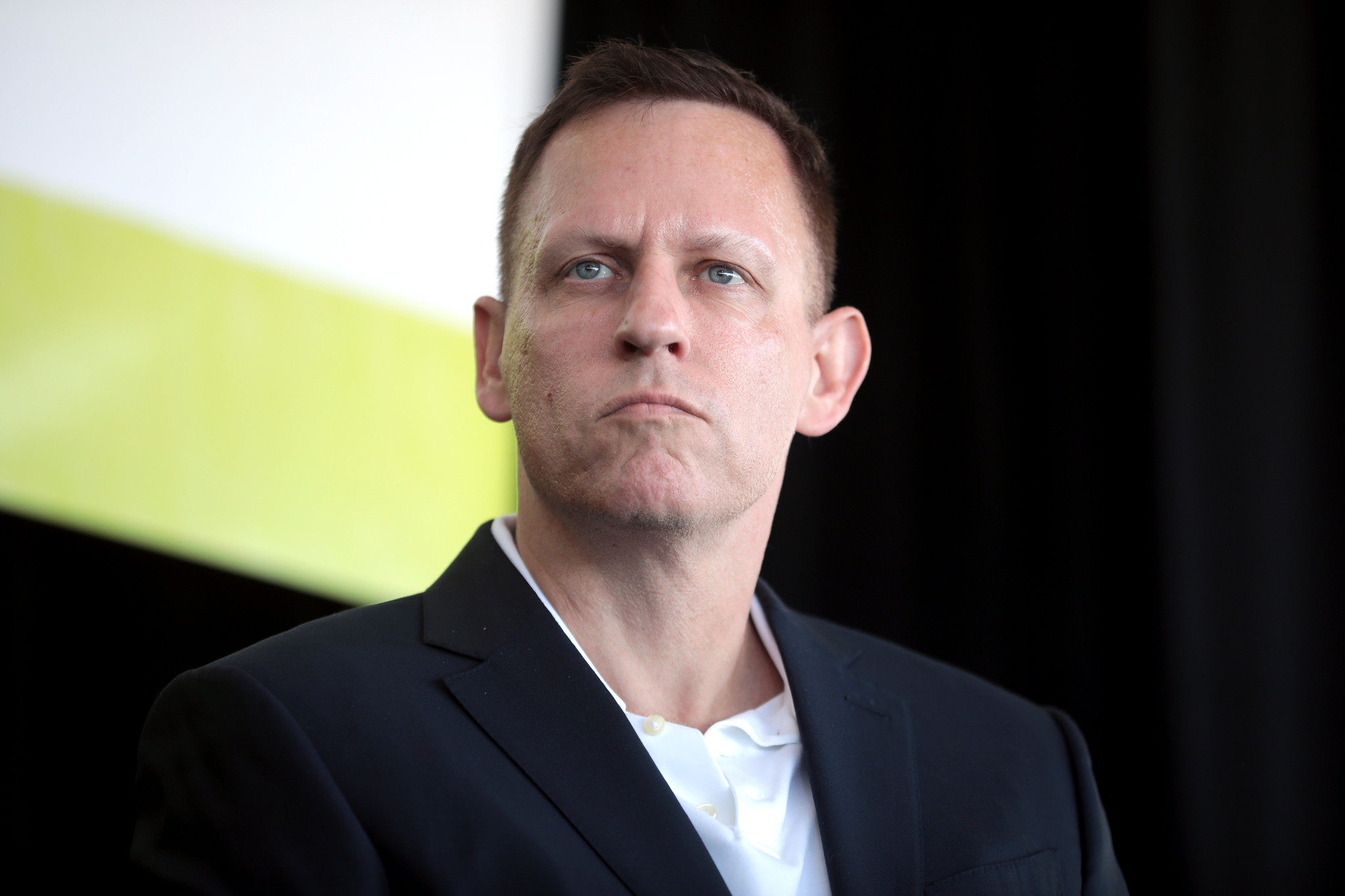 Peter ThielFinancial stake in Miller's own policy area
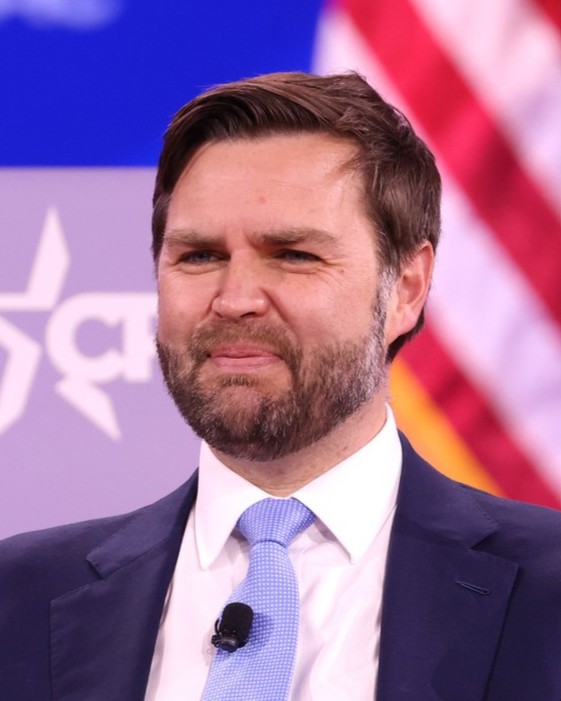 JD VanceOverruled in a Signal war-plans chat
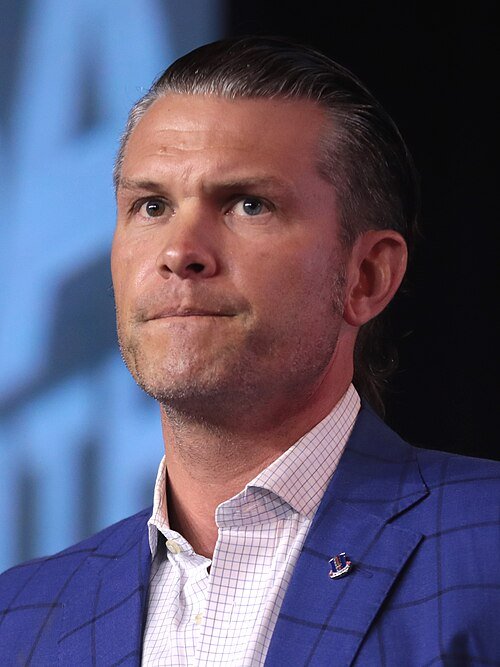 Pete HegsethDirected to deploy troops domestically
Federal ethics disclosures released in June 2025 showed Miller holds between $100,000 and $250,000 in stock in Palantir Technologies — the company co-founded and chaired by Peter Thiel — held in a brokerage account belonging to one of Miller's young children19. Palantir holds ICE contracts worth tens of millions of dollars, including a $30 million deal to build "ImmigrationOS," a tracking platform for the same deportation operations Miller personally directs as the administration's immigration policy chief20. A Project On Government Oversight analysis found at least 11 other administration officials also hold Palantir stock21.
A White House official told POGO that Miller "has confirmed to White House ethics officials that he has and will continue to recuse from participating in official matters that could affect those stocks." A Department of Homeland Security spokesperson called the ethics concerns "very silly"19.
Ethics watchdogs argue that holding a personal financial stake in the primary technology vendor for the exact enforcement machinery you're building policy around is a textbook conflict of interest, regardless of a recusal pledge — and that placing the stock in a child's account, rather than divesting, looks designed to minimize scrutiny rather than the conflict itself.
Supporters note the holding is a passive investment, not an active business relationship, that Miller doesn't personally control ICE's contracting decisions, and that a formal recusal commitment is the standard tool for managing exactly this kind of disclosed conflict.
In the same Signal group chat at the center of Pete Hegseth's Yemen strike-planning controversy, Vice President Vance raised concerns about the timing of the planned strikes. According to the chat log reported by The Atlantic, Miller cut off the debate, writing "As I heard it, the president was clear: green light," which ended the discussion and let the strikes proceed22. NBC News later described Miller as having accumulated more day-to-day policy influence in the West Wing than anyone besides Trump himself — "not Vice President JD Vance. Not chief of staff Susie Wiles. Not anyone else"1.
Miller's message in the chat reflected his understanding that Trump himself had already made the final call, framing his intervention as relaying the president's decision rather than substituting his own judgment for the Vice President's.
Observers point to the exchange as a clear, documented example of an unelected deputy chief of staff exercising more real authority over military and national security decisions than the elected Vice President, raising questions about the White House's actual chain of command.
Supporters argue that relaying a decision the president has already made isn't the same as overriding anyone, and that an efficient, trusted aide resolving process debates quickly is a sign of a well-functioning White House, not a dysfunctional one.
In October 2025, following a chaotic confrontation in Chicago in which a federal agent shot a local woman, Miller — who holds no formal military or Cabinet role — delivered an order to Department of Defense personnel to prepare to deploy troops into the city, at a moment when the facts on the ground were still unclear and local police disputed the federal account of what happened23. Reporting described Miller as the driving force marshaling federal law enforcement, including resources under Secretary Hegseth's Department of Defense, behind an escalating series of crackdowns in Democratic-led cities23.
The White House has framed the deployments as necessary support for law enforcement in cities it says have lost control of public safety, with Miller positioned internally as an effective messenger for that strategy rather than as its sole decision-maker.
Critics argue that a policy aide with no confirmed national security role directing military preparedness against American cities, based on disputed and unverified facts, blurs both the military's role in domestic law enforcement and the normal chain of command running through the Secretary of Defense and the president.
Supporters see Miller's coordination role as staff-level execution of policy the president and Secretary Hegseth had already authorized, not independent decision-making, and argue rapid federal response to urban unrest is a legitimate use of executive authority.
Key Dates
Later attends Duke University.
Later revealed by SPLC's Hatewatch in 2019.
Becomes a central figure on immigration policy.
Widely reported as the policy's chief architect.
Dozens of members of Congress call for his resignation.
A conservative legal advocacy group modeled on the ACLU.
JD Vance publicly congratulates the pick.
Orchestrates the CECOT deportation flights; overrides Vance in the Yemen strike Signal chat.
Ethics watchdogs flag the conflict of interest.
Following a federal agent's shooting of a local resident.
Common Questions
No. His formal title is White House Deputy Chief of Staff for Policy and Homeland Security Advisor — below Cabinet rank — but multiple reports describe his actual influence as exceeding that of Cabinet secretaries and the Vice President on immigration and related national security matters.
Hundreds of emails from 2015–2016 to a Breitbart editor, in which Miller promoted a novel widely cited by white nationalist movements and a website that publishes white-nationalist writers, and pushed for more coverage of crimes by nonwhite immigrants. The White House did not dispute the emails' authenticity or content, instead attacking the credibility of the organization that published them.
He holds a disclosed $100,000–$250,000 stake in Palantir, which has major ICE contracts, including a $30 million deportation-tracking system. The White House says he has pledged to recuse himself from matters affecting that stock.